
No products in the cart.
Shop all products
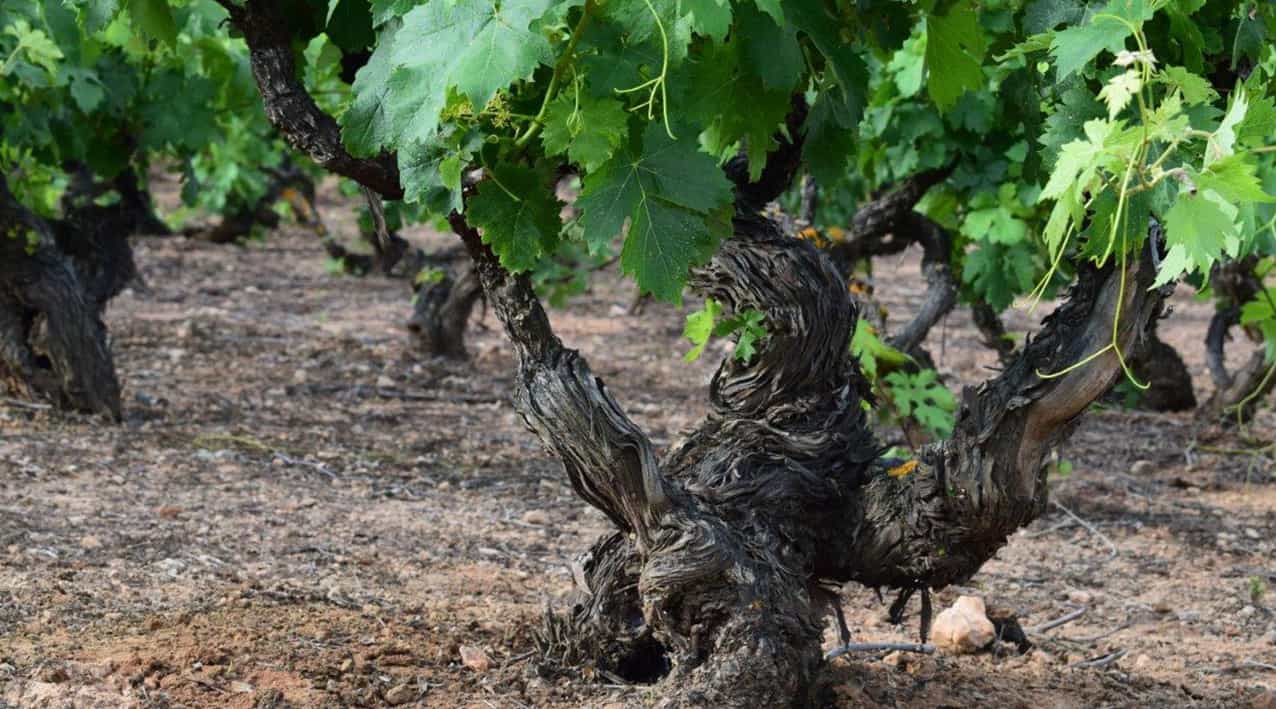
If we look at a vineyard landscape, we will find that there are two types of vine planting: goblet planting, the most traditional and oldest form, and trellis planting. The latter is one of the most widespread systems. , parallel rows of vines in which different types of support with wires or cords are used to guide the vine.
The use of one training system or another depends on the type of soil, the variety of the vine, or the climate. .
The glass formation is the oldest. The vine, which is a climbing plant, is left to grow without any support to guide the vegetation, and takes on a rounded shape in which the leaves grow one on top of the other. Curiously, it was previously thought that the goblet formation was equivalent old and low-yielding vines, and yet they are now coveted as a symbol of quality and are considered to be the ones that give personality to the wine.
The goblet formation is more economical, since it does not need posts or wires, but it has the disadvantage that all tasks such as winter pruning, green pruning or grape harvesting must be done manually. It also has less aeration and less sunlight for the bunches.
Goblet plantations are usually the oldest in the vineyard, small plots that produce a lower load of grapes, which means that the quality of the bunches is higher.
Although we talk about goblet plantations, it is actually a type of free-form pruning in This reduces the cutting of wood and gives more uniformity to the formation of the strain.
Goblet pruning allows for the application of respectful pruning. With good pruning in winter and green pruning, pruning cuts are reduced and the risk of contracting typical diseases of vine wood.
At Bodegas Federico we have vineyards with goblet formation, depending on the age of the vine and the characteristics of the soil of each plot, to obtain quality wines, bordering on excellence.